
This company has no active jobs
0 Review
Rate This Company ( No reviews yet )
Information Company
- Total Jobs 0 Jobs
- Full Address 3 Boat Lane
Something About Company
Understanding DeepSeek R1
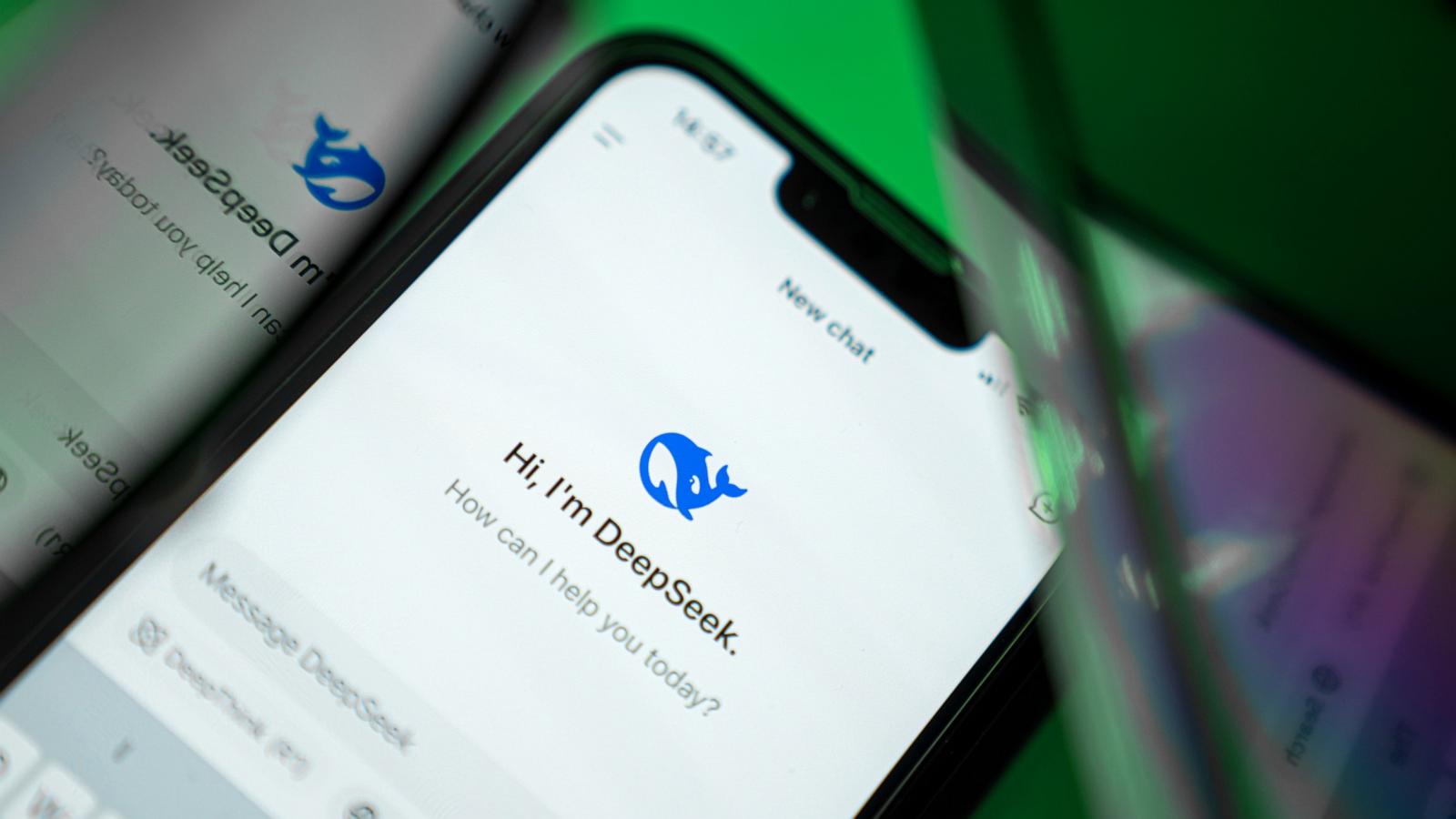
We’ve been tracking the explosive increase of DeepSeek R1, which has taken the AI world by storm in recent weeks. In this session, we dove deep into the advancement of the DeepSeek household – from the early designs through DeepSeek V3 to the advancement R1. We likewise checked out the technical developments that make R1 so unique on the planet of open-source AI.
The DeepSeek Family Tree: From V3 to R1

DeepSeek isn’t just a single design; it’s a family of progressively sophisticated AI systems. The evolution goes something like this:
DeepSeek V2:
This was the foundation model which leveraged a mixture-of-experts architecture, where only a subset of professionals are used at inference, drastically enhancing the processing time for each token. It also included multi-head latent attention to minimize memory footprint.
DeepSeek V3:
This design introduced FP8 training methods, which helped drive down training costs by over 42.5% compared to previous iterations. FP8 is a less precise method to save weights inside the LLMs but can greatly improve the memory footprint. However, training using FP8 can generally be unstable, and it is tough to obtain the desired training results. Nevertheless, DeepSeek uses multiple tricks and attains extremely steady FP8 training. V3 set the stage as a highly effective design that was currently affordable (with claims of being 90% less expensive than some closed-source options).
DeepSeek R1-Zero:
With V3 as the base, the team then presented R1-Zero, the first reasoning-focused model. Here, the focus was on teaching the design not just to create responses however to “think” before addressing. Using pure reinforcement learning, the model was encouraged to generate intermediate thinking actions, for instance, taking extra time (frequently 17+ seconds) to resolve an easy issue like “1 +1.”
The key development here was making use of group relative policy optimization (GROP). Instead of depending on a conventional process reward design (which would have required annotating every action of the reasoning), GROP compares numerous outputs from the design. By sampling a number of potential responses and scoring them (utilizing rule-based measures like specific match for math or verifying code outputs), the system learns to favor reasoning that leads to the proper outcome without the requirement for specific supervision of every intermediate idea.
DeepSeek R1:
Recognizing that R1-Zero’s without supervision technique produced thinking outputs that could be difficult to read or perhaps mix languages, the developers went back to the drawing board. They used the raw outputs from R1-Zero to produce “cold start” data and after that by hand curated these examples to filter and enhance the quality of the thinking. This human post-processing was then used to tweak the original DeepSeek V3 design further-combining both reasoning-oriented reinforcement learning and monitored fine-tuning. The outcome is DeepSeek R1: a design that now produces legible, coherent, and dependable reasoning while still maintaining the performance and cost-effectiveness of its predecessors.
What Makes R1 Series Special?
The most interesting element of R1 (absolutely no) is how it developed thinking capabilities without specific guidance of the thinking process. It can be further enhanced by utilizing cold-start information and supervised reinforcement learning to produce readable thinking on general tasks. Here’s what sets it apart:
Open Source & Efficiency:
R1 is open source, permitting researchers and designers to check and build on its developments. Its cost effectiveness is a significant selling point particularly when compared to closed-source designs (claimed 90% cheaper than OpenAI) that need enormous calculate spending plans.
Novel Training Approach:
Instead of relying entirely on annotated reasoning (which is both costly and lengthy), the design was trained utilizing an outcome-based approach. It started with quickly proven jobs, such as mathematics problems and coding exercises, where the accuracy of the final response could be quickly measured.
By utilizing group relative policy optimization, the training process compares several produced responses to determine which ones satisfy the wanted output. This relative scoring system allows the design to discover “how to believe” even when intermediate thinking is produced in a freestyle manner.
Overthinking?
An intriguing observation is that DeepSeek R1 often “overthinks” simple problems. For instance, when asked “What is 1 +1?” it might invest nearly 17 seconds evaluating various scenarios-even considering binary representations-before concluding with the right response. This self-questioning and confirmation procedure, although it might appear inefficient at very first glance, might show helpful in intricate tasks where much deeper thinking is necessary.
Prompt Engineering:
Traditional few-shot triggering strategies, which have actually worked well for lots of chat-based models, can in fact degrade performance with R1. The designers advise utilizing direct problem declarations with a zero-shot technique that specifies the output format plainly. This makes sure that the model isn’t led astray by extraneous examples or hints that might disrupt its internal thinking procedure.
Beginning with R1
For those aiming to experiment:
Smaller variations (7B-8B) can run on customer GPUs and even just CPUs
Larger versions (600B) need considerable compute resources
Available through significant cloud companies
Can be deployed in your area via Ollama or vLLM
Looking Ahead
We’re particularly fascinated by numerous implications:
The potential for this approach to be used to other thinking domains
Effect on agent-based AI systems traditionally built on chat models
Possibilities for integrating with other guidance strategies
Implications for business AI deployment
Thanks for reading Deep Random Thoughts! Subscribe for totally free to get brand-new posts and support my work.
Open Questions
How will this affect the advancement of future reasoning models?
Can this technique be reached less proven domains?
What are the ramifications for multi-modal AI systems?
We’ll be watching these developments closely, especially as the neighborhood starts to try out and construct upon these methods.
Resources
Join our Slack neighborhood for ongoing conversations and updates about DeepSeek and other AI developments. We’re seeing interesting applications currently emerging from our bootcamp individuals dealing with these designs.
Chat with DeepSeek:

https://www.deepseek.com/
Papers:
DeepSeek LLM
DeepSeek-V2
DeepSeek-V3
DeepSeek-R1
Blog Posts:
The Illustrated DeepSeek-R1
DeepSeek-R1 Paper Explained
DeepSeek R1 – a brief summary
Cloud Providers:
Nvidia
Together.ai
AWS
Q&A
Q1: Which design should have more attention – DeepSeek or Qwen2.5 Max?
A: While Qwen2.5 is likewise a strong design in the open-source neighborhood, the option ultimately depends on your use case. DeepSeek R1 highlights innovative thinking and an unique training method that may be specifically important in jobs where verifiable reasoning is important.
Q2: Why did major service providers like OpenAI select monitored fine-tuning rather than reinforcement knowing (RL) like DeepSeek?
A: We ought to keep in mind upfront that they do utilize RL at the minimum in the type of RLHF. It is likely that designs from major providers that have reasoning abilities currently utilize something similar to what DeepSeek has actually done here, but we can’t make certain. It is also most likely that due to access to more resources, gratisafhalen.be they favored monitored fine-tuning due to its stability and the all set availability of large annotated datasets. Reinforcement learning, although powerful, can be less foreseeable and larsaluarna.se more difficult to manage. DeepSeek’s method innovates by applying RL in a reasoning-oriented way, allowing the design to discover reliable internal reasoning with only very little procedure annotation – a method that has actually shown appealing regardless of its intricacy.
Q3: Did DeepSeek use test-time calculate methods similar to those of OpenAI?
A: DeepSeek R1’s style stresses performance by leveraging methods such as the mixture-of-experts technique, which activates just a subset of specifications, to decrease compute during reasoning. This focus on efficiency is main to its cost benefits.

Q4: What is the distinction in between R1-Zero and R1?
A: R1-Zero is the preliminary design that finds out reasoning entirely through support knowing without specific procedure supervision. It generates intermediate reasoning actions that, while sometimes raw or mixed in language, function as the structure for learning. DeepSeek R1, on the other hand, improves these outputs through human post-processing and monitored fine-tuning. In essence, R1-Zero provides the without supervision “spark,” and R1 is the polished, more meaningful version.
Q5: How can one remain upgraded with in-depth, technical research while handling a busy schedule?
A: Remaining existing involves a combination of actively engaging with the research study community (like AISC – see link to above), following preprint servers like arXiv, going to appropriate conferences and webinars, and taking part in conversation groups and newsletters. Continuous engagement with online communities and collective research jobs also plays a key function in staying up to date with technical advancements.
Q6: In what use-cases does DeepSeek exceed models like O1?
A: The short answer is that it’s too early to inform. DeepSeek R1’s strength, however, lies in its robust reasoning capabilities and its performance. It is particularly well fit for jobs that need verifiable logic-such as mathematical issue resolving, code generation, and structured decision-making-where intermediate reasoning can be examined and verified. Its open-source nature even more enables tailored applications in research and business settings.
Q7: What are the implications of DeepSeek R1 for enterprises and start-ups?
A: The open-source and cost-efficient style of DeepSeek R1 lowers the entry barrier for deploying innovative language designs. Enterprises and start-ups can take advantage of its sophisticated reasoning for agentic applications ranging from automated code generation and consumer assistance to information analysis. Its versatile deployment options-on customer hardware for smaller sized models or cloud platforms for bigger ones-make it an appealing alternative to proprietary options.
Q8: Will the design get stuck in a loop of “overthinking” if no correct response is discovered?
A: While DeepSeek R1 has been observed to “overthink” basic problems by exploring numerous reasoning paths, it includes stopping requirements and assessment mechanisms to avoid boundless loops. The reinforcement learning structure motivates merging toward a verifiable output, even in uncertain cases.
Q9: Is DeepSeek V3 completely open source, and is it based on the Qwen architecture?
A: Yes, DeepSeek V3 is open source and acted as the foundation for later iterations. It is developed on its own set of innovations-including the mixture-of-experts method and FP8 training-and is not based upon the Qwen architecture. Its style emphasizes effectiveness and expense decrease, setting the phase for the thinking developments seen in R1.
Q10: How does DeepSeek R1 carry out on vision tasks?
A: DeepSeek R1 is a text-based model and does not integrate vision abilities. Its design and training focus solely on language processing and reasoning.
Q11: Can specialists in specialized fields (for example, engel-und-waisen.de labs working on treatments) apply these methods to train domain-specific designs?
A: Yes. The innovations behind DeepSeek R1-such as its outcome-based reasoning training and effective architecture-can be adapted to numerous domains. Researchers in fields like biomedical sciences can tailor these methods to build models that address their particular challenges while gaining from lower compute costs and robust thinking capabilities. It is likely that in deeply specialized fields, nevertheless, there will still be a need for supervised fine-tuning to get reliable outcomes.
Q12: Were the annotators for the human post-processing professionals in technical fields like computer technology or mathematics?
A: The discussion showed that the annotators mainly focused on domains where accuracy is quickly verifiable-such as mathematics and coding. This recommends that expertise in technical fields was certainly leveraged to make sure the precision and clearness of the thinking data.
Q13: Could the design get things incorrect if it counts on its own outputs for discovering?
A: While the model is created to optimize for right responses by means of reinforcement learning, there is constantly a threat of errors-especially in uncertain situations. However, by examining several candidate outputs and reinforcing those that result in proven outcomes, the training process lessens the probability of propagating incorrect thinking.
Q14: How are hallucinations decreased in the design provided its iterative reasoning loops?
A: Using rule-based, verifiable tasks (such as mathematics and coding) helps anchor the design’s reasoning. By comparing several outputs and using group relative policy optimization to reinforce just those that yield the proper result, the model is directed far from generating unfounded or hallucinated details.
Q15: Does the model rely on complex vector mathematics?
A: Yes, advanced techniques-including complex vector math-are essential to the execution of mixture-of-experts and attention mechanisms in DeepSeek R1. However, the main focus is on utilizing these techniques to allow efficient thinking instead of showcasing mathematical intricacy for its own sake.
Q16: Some worry that the model’s “thinking” might not be as improved as human thinking. Is that a valid concern?
A: Early iterations like R1-Zero did produce raw and often hard-to-read reasoning. However, the subsequent improvement process-where human specialists curated and improved the reasoning data-has significantly improved the clearness and reliability of DeepSeek R1’s internal thought process. While it remains a developing system, iterative training and feedback have actually caused meaningful enhancements.
Q17: Which design variants are suitable for regional release on a laptop with 32GB of RAM?
A: For local testing, a medium-sized model-typically in the variety of 7B to 8B parameters-is suggested. Larger designs (for example, those with hundreds of billions of parameters) need substantially more computational resources and are much better matched for cloud-based deployment.
Q18: Is DeepSeek R1 “open source” or does it use only open weights?
A: DeepSeek R1 is provided with open weights, meaning that its design parameters are publicly available. This aligns with the overall open-source approach, permitting researchers and developers to additional check out and construct upon its developments.
Q19: What would take place if the order of training were reversed-starting with monitored fine-tuning before not being watched reinforcement knowing?
A: The existing approach allows the design to initially explore and produce its own thinking patterns through unsupervised RL, and after that refine these patterns with monitored approaches. Reversing the order might constrain the model’s ability to find diverse thinking courses, potentially restricting its general performance in jobs that gain from autonomous idea.
Thanks for checking out Deep Random Thoughts! Subscribe free of charge to get new posts and support my work.
