
This company has no active jobs
0 Review
Rate This Company ( No reviews yet )
Information Company
- Total Jobs 0 Jobs
- Full Address Martensvegen 131
Something About Company
NHS: The Family They Never Had

Among the organized chaos of medical professionals in Birmingham, a young man named James Stokes moves with quiet purpose. His smart shoes whisper against the floor as he exchanges pleasantries with colleagues—some by name, others with the familiar currency of a “how are you.”
James displays his credentials not merely as institutional identification but as a declaration of belonging. It rests against a well-maintained uniform that offers no clue of the tumultuous journey that brought him here.
What separates James from many of his colleagues is not obvious to the casual observer. His bearing gives away nothing of the fact that he was among the first beneficiaries of the NHS Universal Family Programme—an initiative designed specifically for young people who have spent time in care.
“The Programme embraced me when I needed it most,” James says, his voice steady but tinged with emotion. His remark encapsulates the core of a programme that aims to transform how the massive healthcare system perceives care leavers—those vulnerable young people aged 16-25 who have graduated out of the care system.
The statistics tell a troubling story. Care leavers commonly experience greater psychological challenges, money troubles, shelter insecurities, and reduced scholarly attainment compared to their contemporaries. Behind these impersonal figures are individual journeys of young people who have navigated a system that, despite good efforts, frequently fails in delivering the stable base that molds most young lives.
The NHS Universal Family Programme, launched in January 2023 following NHS England’s promise to the Care Leaver Covenant, signifies a significant change in organizational perspective. Fundamentally, it accepts that the entire state and civil society should function as a “collective parent” for those who haven’t known the security of a typical domestic environment.
Ten pathfinder integrated care boards across England have blazed the trail, creating structures that rethink how the NHS—one of Europe’s largest employers—can create pathways to care leavers.
The Programme is detailed in its methodology, starting from detailed evaluations of existing practices, establishing oversight mechanisms, and obtaining leadership support. It acknowledges that effective inclusion requires more than lofty goals—it demands practical measures.
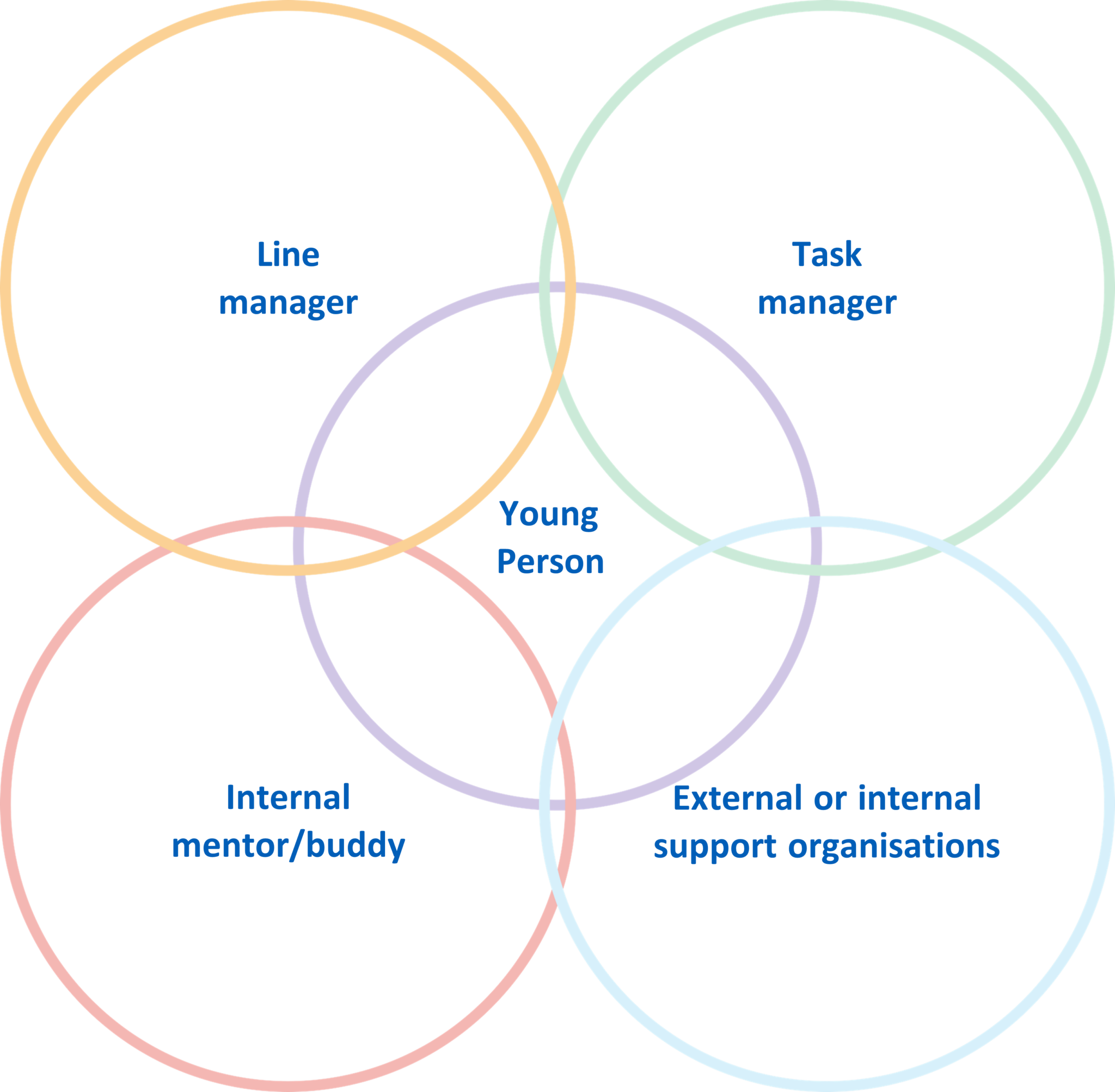
In NHS Birmingham and Solihull ICB, where James began his journey, they’ve established a reliable information exchange with representatives who can deliver help and direction on wellbeing, HR matters, recruitment, and inclusivity efforts.
The conventional NHS recruitment process—structured and potentially intimidating—has been carefully modified. Job advertisements now highlight attitudinal traits rather than numerous requirements. Application procedures have been redesigned to consider the particular difficulties care leavers might face—from not having work-related contacts to having limited internet access.
Possibly most crucially, the Programme recognizes that starting a job can present unique challenges for care leavers who may be managing independent living without the safety net of family resources. Issues like travel expenses, personal documentation, and banking arrangements—taken for granted by many—can become substantial hurdles.
The brilliance of the Programme lies in its attention to detail—from explaining payslip deductions to helping with commuting costs until that critical first wage disbursement. Even apparently small matters like coffee breaks and professional behavior are carefully explained.
For James, whose NHS journey has “revolutionized” his life, the Programme offered more than work. It provided him a feeling of connection—that intangible quality that grows when someone feels valued not despite their past but because their unique life experiences enriches the workplace.
“Working for the NHS isn’t just about doctors and nurses,” James comments, his eyes reflecting the modest fulfillment of someone who has found his place. “It’s about a collective of different jobs and roles, a group of people who really connect.”
The NHS Universal Family Programme exemplifies more than an job scheme. It stands as a bold declaration that institutions can evolve to embrace those who have navigated different paths. In doing so, they not only alter individual futures but enhance their operations through the distinct viewpoints that care leavers contribute.
As James moves through the hospital, his participation silently testifies that with the right assistance, care leavers can flourish in environments once deemed unattainable. The embrace that the NHS has extended through this Programme signifies not charity but recognition of hidden abilities and the profound truth that all people merit a community that believes in them.
