This company has no active jobs
0 Review
Rate This Company ( No reviews yet )

Goethe Zertifikate
(0)Information Company
- Total Jobs 0 Jobs
- Full Address Mellomila 116
Something About Company
Twenty Myths About Buy Language Certificate: Busted
The Importance of Language Certificates: A Comprehensive Guide to Buying One
In today’s globalized world, the capability to communicate in multiple languages is not just a valuable ability; it is typically a requirement for different scholastic and expert opportunities. Language certificates serve as evidence of your efficiency in a language and can open doors to new professions, academic potential customers, and even migration possibilities. This article delves into why someone might wish to buy a language certificate, the procedure to do so, and necessary factors to consider.
Comprehending Language Certificates
Language certificates are standardized documents that verify an individual’s language efficiency. They are offered by numerous companies worldwide and be available in lots of kinds, depending on the language being licensed. Some widely known certifications include the Cambridge English Qualifications, Test of English as a Foreign Language (TOEFL), and Test de Evaluation de Français (TEF), to name a few.
Why Buy a Language Certificate?
-
Professional Advancement: Many companies need language proficiency as part of their working with requirements. A language certificate can make a candidate more competitive.
-
Academic Requirements: Universities often require evidence of language proficiency for admission to programs taught in a foreign language.
-
Immigration: Many countries require language proficiency proof for visa applications or citizenship.
-
Personal Growth: For some, getting a language certificate is a way to verify their knowing journey and encourage themselves to continue enhancing their language abilities.
-
Cross-Cultural Opportunities: As globalization expands, the need for multilingual professionals in varied cultures increases. Language certificates can assist in such chances.
Kinds Of Language Certificates
Below is a table summing up popular language accreditations, their acknowledged organizations, and the languages they cover:
| Certification Name | Languages Available | Organization |
|---|---|---|
| Cambridge English Qualifications | English | University of Cambridge |
| Test of English as a Foreign Language (TOEFL) | English | Educational Testing Service (ETS) |
| International English Language Testing System (IELTS) | English | British Council, IDP, Cambridge |
| Test de Evaluation de Français (TEF) | French | Chamber of Commerce and Industry of Paris |
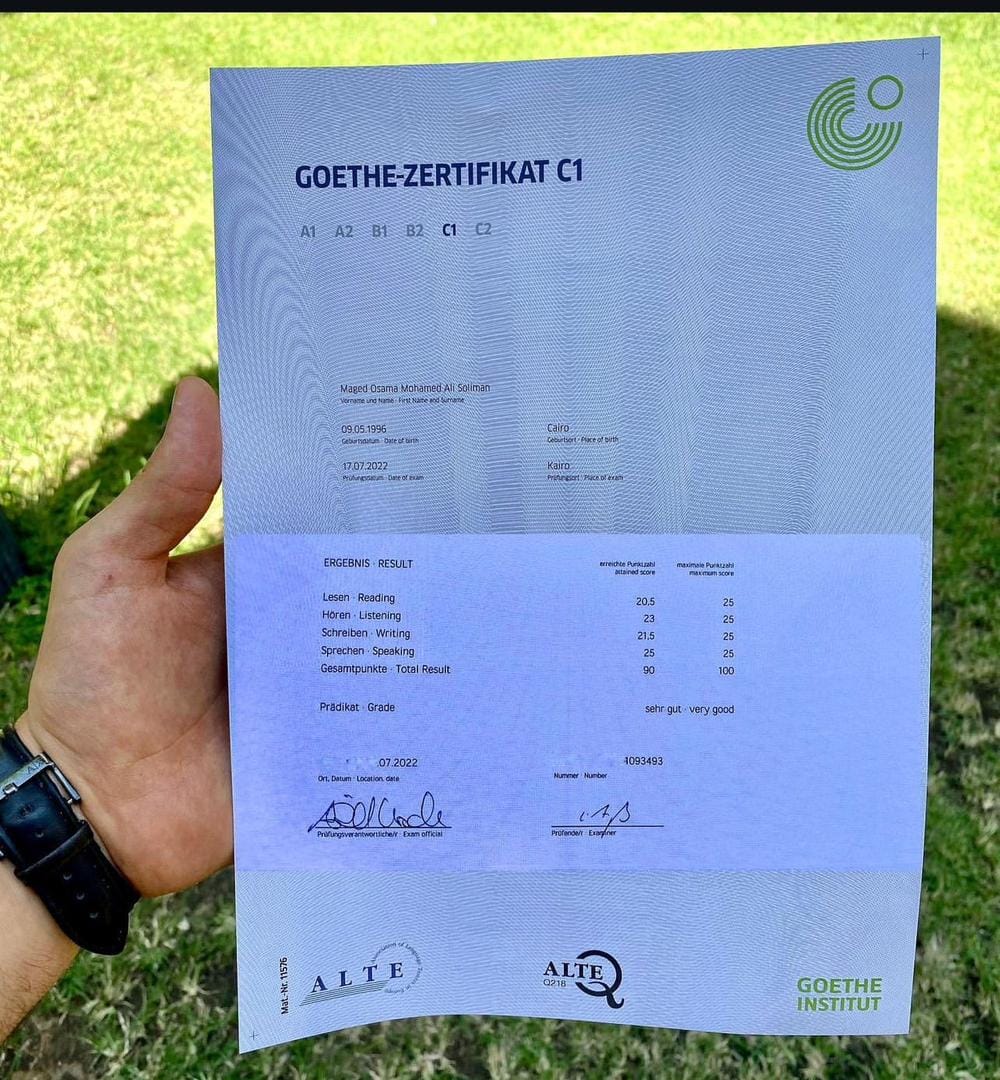
| Goethe-zertifikat goethe institut | German | Goethe-Institut |
| Diplôme d’études en langue française (DELF) | French | Ministry of Education, France |
| HSK | Chinese | Hanban |
| Spanish as a Foreign Language (DELE) | Spanish | Instituto Cervantes |
How to Buy a Language Certificate
Purchasing a language certificate is a typical practice, yet it is critical to guarantee that a person’s capabilities match the proficiency level stated in the certificate. This involves the following actions:
-
Research Certifying Organizations: Investigate reputable institutions that provide genuine language certificates. Be mindful of companies with poor evaluations or questionable practices.
-
Choose the Right Examination: Select a certification that is recognized in your market or by universities you have an interest in.
-
Get ready for the Examination: Prior to acquiring a certificate, prospects need to prepare sufficiently. Enroll in classes, research study appropriate materials, and practice with sample examinations.
-
Take the Examination: Register and sit for the examination. Many certification bodies permit retests if one does not attain the desired rating.
-
Get Your Certificate: Upon successful conclusion, you will get your language certificate, which can now be sent for job applications, university admissions, or immigration procedures.
Often Asked Questions (FAQ)
Q1: Can I buy a language certificate without taking the exam?
A1: While it might be possible to acquire a certificate without taking the exam, such practices are unethical and unlawful. It is crucial to get a real certificate that shows real efficiency.
Q2: How long does it require to get the outcomes after the evaluation?
A2: It generally takes anywhere from a couple of days to a number of weeks to get results, depending on the accreditation organization.
Q3: Are online language certificates as legitimate as in-person ones?
A3: Many recognized online language certificates are valid, but candidates need to verify the releasing organization’s reliability.
Q4: What is the difference in between B2 and C1 language efficiency levels?
A4: According to the Common European Framework of Reference for Languages (CEFR), B2 indicates an upper-intermediate level where one can speak with a degree of fluency, while C1 suggests a skilled level, where one can utilize the language successfully in various contexts.
Q5: Are there any options to traditional language certificates?
A5: Yes, some online platforms offer casual language assessments and badges that suggest efficiency levels. However, these may not hold the very same weight as main certificates.
Investing in a language certificate can significantly boost one’s expert and scholastic profile, offering opportunities that might otherwise stay unattainable. It is important, nevertheless, to approach this with stability and commitment to true language learning. Ultimately, the objective needs to be genuine efficiency, which can not be substituted by mere possession of a certificate. Those thinking about buying a language certificate ought to prioritize acquiring knowledge and abilities rather than focusing solely on the credential itself. Understanding the procedures and implications involved in this journey is an investment towards a more promising future.
